It is very rare that a good quality LED driver fails because of a manufacturing fault. In most cases the failure is caused by a problem with the installation, or there are some environmental factors at play. In this article, we highlight common factors that can cause an LED driver to fail.
MEAN WELL LED drivers are high-quality LED drivers and come standard with a range of protections that kick in automatically to reduce the risk of damage to the driver and the intended installation.
In most cases, over-voltage, over-power, and overheating protection causes the driver to shut down, either remaining offline or returning to hiccup mode, moving between online and offline states until the issue is resolved.
Cold-Start Overcurrent (Active Electronics & Voltage Drop)
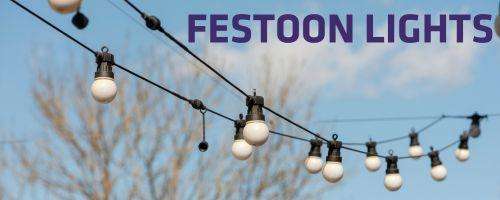
Many modern LED products (festoon lights and other long linear runs) contain internal step-down or active constant-current regulation circuitry to prevent voltage drop across long runs. During initial cold starts, the drivers' output voltage ramps up; these internal regulators activate at lower voltages (e.g. 9V on a 24V system) and draw current to meet target wattage. This momentary inrush trips the driver’s overload protection before it reaches normal operating voltage.
To avoid this, size the LED power supply with sufficient peak-current headroom, or step up to a higher-wattage model to handle initial start-up loads.
Constant Current (CC) vs Constant Voltage (CV) Mismatch
Connecting an LED lighting array to the wrong driver type can cause immediate malfunction, often resulting in rapid flickering, failure to strike, or thermal runaway that quickly burns out the diodes. The difference between LED driver types is as follows:
Constant Voltage (CV) drivers supply a fixed DC output (e.g. 12V, 24V or 48V) to lighting fixtures with internal current-limiting resistors or regulators. e.g the standard LED strip lights.
Constant Current (CC) drivers regulate a fixed current (e.g. 350mA, 700mA, 1050mA) whilst dynamically varying voltage across bare COB modules or diode strings.
Thermal Overload and Ambient Derating
Heat is the leading cause of premature failures across LED drivers that operate for prolonged periods (Weeks to Months). Enclosing drivers in non-ventilated enclosures or placing them near hot fixtures pushes thermal temperatures to the limits. This can eventually push the driver past its operational limits, reducing output power relative to the product's thermal curve.
This often results in a lighting fixture operating for a period of time before turning off. The LED driver will go offline until it has cooled. If this happens repeatedly, it can eventually lead to full degradation of the internal electrolytic capacitors.
AC Mains Surges and Ingress (Moisture/Dust)
Mains surges and voltage spikes do happen, and not every LED driver can manage the impact. MEAN WELL LED drivers feature standard built-in surge protection; however, if your lighting system is at risk, installing surge protection devices upstream of your lighting install can be beneficial.
IP20-rated LED drivers won’t fare well in damp or dusty areas, as moisture and dust can enter their housings. If you have an IP20 LED driver intended for outdoor lighting, protect it in a weatherproof enclosure, or select an outdoor-rated LED driver with suitable ingress protection, such as an IP67-rated driver.
Case Study: Festoon Light Strings Tripping at 9V Start-Up.
An ADM customer who had been using the MEAN WELL LED drivers for many projects over the years had run into a recent issue: two LED drivers had failed on an installation of festoon LED lights.
In most scenarios, if two quality LED drivers failed in the same setting, this would typically indicate an extrinsic factor unrelated to the LED drivers themselves.
Image
In any instance, as part of our GRA process, we returned the LED drivers to PSA, where our in-house technical team reviewed both drivers. Both drivers were still operational, with no issues found. After speaking with the customer, we determined the issue may lie with the festoon lights themselves.
Upon investigating, the festoon lights feature inbuilt electronics that compensate for voltage drop across an installation. For this system, that means the built-in electronics start working at 9V and begin drawing current. In this case, when an operator turns on the power and the output voltage reaches 9V, the string of lights begins to draw current.
Image
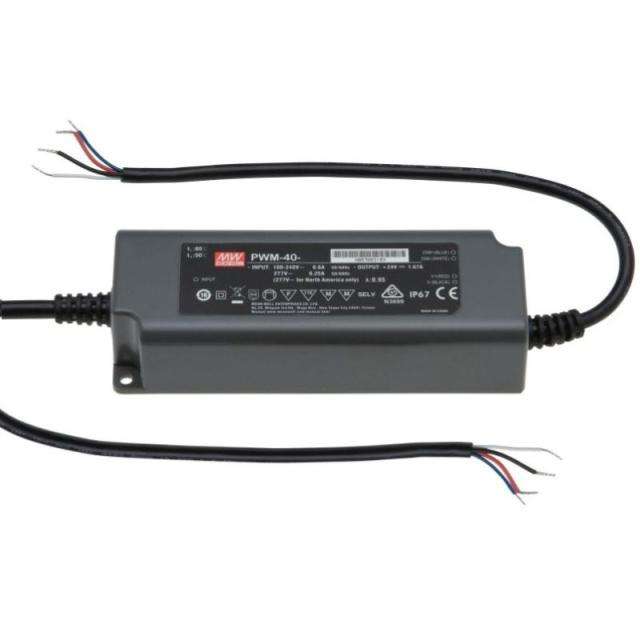
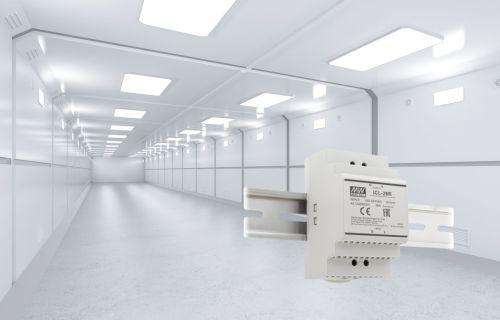
A 40-Watt LED Driver, The MEAN WELL PWM-40
Because the electronics compensate for the voltage, the string of lights tries to draw more current to keep the lights operating at full power. For example, a 40W string of lights at 24V draws 1.67A (40/24 = 1.67A). However, at 9V, the current drawn is 4.44A (40/9 = 4.44A). This is too much current for your 40W LED driver, so that it won’t start the lights.
In this case, the customer selected lower-voltage LED drivers to support the lighting system's internal electronics, so moving to a higher-voltage 12V LED driver would provide enough current to start the lights.
Frequently Asked Questions
Why is the LED driver clicking and lights pulsing repeatedly?
When the LED driver is clicking or pulsing lighting continuously, it likely means your LED driver may have moved into Hiccup Mode. When an output short-circuits or electrical load greater than peak current rating, the driver senses the error and moves into this mode for protection. In Hiccup mode, the LED driver is essentially shutting down and restarting moments later, detecting the fault and repeating the cycle until the causal issue for the error is removed.
Can an LED driver recover after tripping into protection mode?
Yes. MEAN WELL drivers feature an auto-recovery protection. Once the fault condition is cleared, the internals will reset automatically without needing to replace internal fuses. If a LED driver shuts down due to excessive heat, it will resume normal operation once the case has cooled below thermal cutoff threshold.
Contact Us Today!
If you have a question about installing LED drivers, please do not hesitate to send them through to our PSA team here or Call Today on 1800 632 693.