Search results
2775 results found
Blog
Most MEAN WELL LED drivers have an input AC range that extends beyond 240VAC. This allows them to cope with minor power surges, or spikes in the AC line without any trouble. However, you may be installing LED drivers in an area that is known to be prone …
Blog
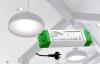
The answer is quite simple: An LED driver allows the output current to fluctuate to maintain a constant voltage output to your LEDs. There are two types of LED drivers: Constant Voltage and Constant Current . The type of LED driver you need to use depends …

Blog
Power Supplies Australia's range of Australian mains connector power cords are all compliant with the Australian Standard AS/NZS3112 and are marked with the Regulatory Compliance Mark, RCM symbol. The RCM symbol represents compliance with two …
Blog
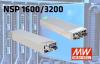
The MEAN WELL NSP 1600/3200 series is a type of single output enclosed type AC to DC power supply with Power Factor Correction (PFC) function. What is Power Factor Correction and Its Benefits? PFC is a performance metric that applies to power supplies …
Product
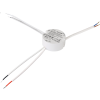
SUNRICHER SRPY-2305N-10CC100-500 DALI-2 Round constant current 10W LED driver Input: 220 ~ 240VAC Output: 100 ~ 500mA / 3 ~ 42V NFC Compatible For built-in …
Product
SUNRICHER SRPY-2305N-15CC200-700 DALI-2 Round constant current 15W LED driver Input: 220 ~ 240VAC Output: 200 ~ 700mA / 3 ~ 42V NFC Compatible For in-build …
Product
SUNRICHER SRPY-2305N-25CC300-850 DALI-2 Round constant current 25W LED driver Input: 220 ~ 240VAC Output: 300 ~ 850mA / 3 ~ 42V NFC Compatible For built-in …
Product
SUNRICHER SRPY-2305N-36CC600-1200 DALI-2 Round constant current 15W LED driver Input: 220 ~ 240VAC Output: 600 ~ 1200mA / 3 ~ 42V NFC Compatible For in-build …
Blog
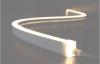
The LED Neon Flex strips are LED strips encased within a flexible double silicon sleeve, producing that forever timeless neon glow aesthetic. The LBY LED Neon Flex range is powered by a 24v DC input, with the series producing a power output range of 8.6 - …
Blog
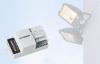
Microwave motion sensors are advanced devices that use microwave technology to detect movement in a given area. Unlike PIR sensors that rely on heat signatures, microwave sensors emit continuous microwave signals into their environment and measure the …