PSA Guide: DALI-2 DT6 vs DT8
15 Sep 2026
DALI-2 is an industry-standard digital protocol for controlling addressable lighting in commercial, architectural, and other building lighting applications. Within the DALI-2 standard, device types indicate the functions supported by various categories of control gear. DT6 and DT8 are two important device types for LED lighting.
Send any questions to our PSA team here or Call Today on 1800 632 693.
Key Takeaways
- DT6 vs. DT8: DT6 controls standard single-channel dimming (requires two DALI addresses for tunable white); DT8 controls multi-channel colour and CCT natively on a single address.
- Colour Control: DT6 relies on external controllers to balance warm/cool outputs; DT8 drivers mix colour internally via direct Kelvin commands.
- BMS Compatibility: Both integrate with major BMS platforms via BACnet, Modbus, and KNX through DALI gateways.
- Gateway Requirement: Standard gateways work for DT6, but DT8 colour features require a gateway specifically rated for Part 209 (DT8).
Understanding DALI-2 DT6 (IEC 62386-207)
The DALI-2 DT6, as defined by IEC 62386-207, is used for LED control gear that supports conventional single-channel LED output. The DT6 protocol provides switching and digital dimming across the LED driver's specified operating range. The DT6 supports dimming for a variety of dimmable LED drivers, including specialist ultra-dimming capabilities from 0.1% up to 100%.
Best Applications for DT6 Drivers
A typical DT6 control-gear unit uses one DALI control-gear short address and regulates a single LED output channel. It is therefore suitable for fixed-colour luminaires, such as those that produce a colour temperature of 3000 K, 4000 K, or another specified colour temperature.
Typical applications include:
- Offices with fixed-white luminaires.
- Warehouses and industrial facilities.
- Workshops and factories.
- Car parks and surrounding areas.
- Commercial buildings that need dimming based on occupancy or daylight.
How DT6 Handles Tunable-White Lighting
A typical tunable-white luminaire has individual warm-white and cool-white LED channels. When you control the two channels with separate DT6 control gear, each channel usually needs its own DALI address. The lighting-control system must coordinate the two channels to achieve the desired colour temperature and brightness.
Although this method can be effective, it requires the controller or commissioning software to link the channels and manage their relative output levels.
Understanding DALI-2 DT8 (IEC 62386-209)
The DALI-2 DT8, as specified in IEC 62386-209, is used for colour-control gear and can coordinate several LED colour channels while making colour-control functions available to the DALI system.
Specific functions vary by product, but generally the DT8 type LED drivers may support one or more of the following standard colour types:
- Tc: Tunable-white colour-temperature control
- xy: chromaticity control using the coordinates in the CIE 1931 colour space.
- RGBWAF: control six colour channels: red, green, blue, white, amber and a free colour.
When searching for a DT8-supported LED driver, you may find products featuring RGB / RGBW or RGBW+CCT, or tunable white.
A product advertised as RGB, RGBW, RGB+CCT, or tunable white might support one or more DT8 functions. Always refer to the driver's datasheet and check the application controller's compatibility.
Tunable-White Control via DT8 (Tc)
Using the DT8(Tc) function, the controller can request a colour temperature within the luminaire's supported range. In some lighting installations, the luminaire range may be limited to 3000K or 5000K, and another installation may have the full 2700K to 6500K range; in either case, the DT8 control gear can support these luminaires within their specific ranges, as long as both the driver and luminaire are rated to operate within those ranges.
RGB, RGBW, and Full-Spectrum Colour Mixing
The DT8 colour-control gear can be used with multi-channel colour systems and, depending on implementation, may include RGB, RGBW, or combinations with extra white, amber, or tunable-white channels.
The number of physical LED channels and the number of DALI addresses vary by driver design; a multi-function product that incorporates separate colour-control functions may use more than one address, depending on the manufacturer's implementation.
DALI Subnet Limits: DT6 vs DT8 Addressing
One DALI subnet can support up to 64 short addresses for control gear and up to 64 short addresses for control devices, subject to the capabilities of the particular system. Control gear includes devices such as LED drivers, and control devices include items such as sensors, switches, and other input devices.
For example, if each of the 50 tunable-white fittings uses two separately addressed DT6 channels, the installation might need up to 100 control-gear addresses, exceeding the 64-address limit for a single DALI subnet.
If each fitting is implemented as one DT8 colour-control device, it may require only 50 control-gear addresses, provided the intended LED driver supports the required colour function from a single address. However, the full system design must still account for bus power, wiring, controller capacity, and the number of control devices.
Colour Shifting and Coordination Challenges
If separate DT6 channels are used for tunable white, the controller must coordinate the warm-white and cool-white outputs, since differences in dimming curves, driver response, LED tolerances, or commissioning settings may cause unwanted colour shifts during transitions.
A compatible DT8 system can make this process easier by letting the controller request both colour temperature and light level. The system, however, does not automatically ensure flicker-free operation or a perfectly steady colour; these features depend on the driver, the LED module, the dimming method, the minimum dimming level, and the luminaire design.
Commissioning & BMS Integration
When installing a tunable-white luminaire with warm-white and cool-white channels controlled by separate DT6 devices, the commissioning process generally needs to associate and program the channels as a coordinated pair, and the commissioning software or application controller may need to configure this relationship between channel output, brightness and colour temperature.
For a fixed-colour luminaire using a DT6 driver, commissioning is generally simpler. The installer typically assigns the driver a DALI short address, places it into the required group or scenes, and configures functions such as switching, dimming, fade times and occupancy, or daylight-based control. The exact process depends on the specific DALI controller and commissioning software.
With a compatible DT8 driver and application controller, the control system can expose direct control parameters for colour temperature, chromaticity or multi-channel colour. While this might make programming and commissioning easier, the actual outcome will vary depending on the controller, gateway, software, and driver implementation.
Connecting to BACnet, KNX, and Modbus Gateways
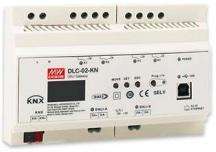
DT6 and DT8 drivers can be integrated with a BMS through a suitable DALI gateway or application controller. In a typical arrangement, the BMS communicates with the gateway using a building-automation protocol, such as BACnet, KNX or Modbus. In contrast, the gateway communicates with the LED driver over the DALI bus. DALI systems can connect to BMS and other networks through gateways that translate between respective systems.
For DT6 devices, the gateway may make functions such as on/off switching, dimming, group control, scenes and driver status available to the BMS. For DT8 devices, the gateway must also support the relevant colour-control type and exposure functions, such as colour temperature, chromaticity or multi-channel colour control. DT8 does not automatically simplify BMS integration.
Image
Summary DT6 vs DT8
Select DT6 when the luminaire's light colour is fixed.
- The application does not need colour-temperature or colour-mixing control. A straightforward, conventional arrangement for controlling fixed-colour LED lighting is preferred.
Select DT8 when:
- The luminaire needs tunable-white control.
- The project requires RGB, RGBW or other supported multi-channel colour control.
- The controller must request colour and brightness as separate lighting parameters.
- Coordinated multi-channel control is required.
DT8 has the capability of reducing the number of control channels that need to be individually addressed and may make the system programming simpler. It does not, however, automatically reduce the physical wiring for the LED output or the number of drivers in every luminaire design.
Still Need a Hand? We're Here to Help!
If you have an upcoming lighting installation for commercial or architectural settings, ensuring the right device type is key to minimising costly delays. ADM have a wide range of DALI 2, DT6 and DT8 LED drivers to support your next installations. We keep stock across our three warehouses, with options in conventional LED lighting and linear lighting, suited to both tunable white and RGBW installations.
If you have any questions, please feel free to send them through to our PSA team here or Call Today on 1800 632 693.
Image